Welcome to THE CA DESK - Your Trusted Partner

The Future of AI-Integrated ERP Systems in 2026
Enterprise Resource Planning (ERP) systems are increasingly becoming intelligent ERP software as businesses adopt artificial intelligence (AI) across their operations. AI-driven ERP systems use machine learning, predictive analytics, and natural language processing to automate routine tasks and provide deeper insights. By 2026, cloud ERP platforms will power more AI automation, enabling organizations to shift from reactive reporting to predictive business management.
An AI ERP system turns traditional software into a dynamic business management hub. It can learn from data, identify patterns, and adjust to changing conditions in real time. These systems enable predictive maintenance, demand forecasting, and intelligent workflow automation across departments, unlocking efficiency and agility. As one report notes, AI enhancements allow ERP software to optimize processes, achieve greater efficiency, and give companies a competitive edge.
Table of Contents
Key AI Features in Modern ERP
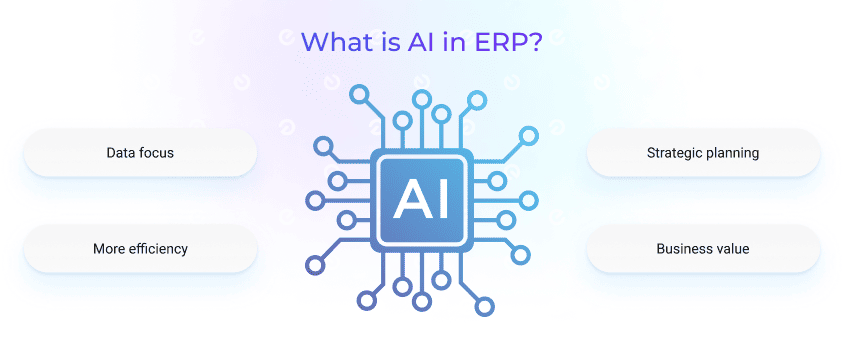
Modern ERP software increasingly includes a variety of AI-powered features:
- Predictive Analytics: AI models analyze historical sales, market trends, and external factors (like weather or economic indicators) to forecast demand, inventory needs, and staffing requirements. This predictive planning helps companies maintain optimal stock levels and prevent stockouts or excess inventory.
- Workflow Automation: Intelligent ERP workflow automation adapts to real-time changes. For instance, if a supplier delay is detected, an AI-enabled ERP can automatically reroute orders or notify procurement teams. Advanced automation handles multi-step processes in finance, procurement, and operations, reducing manual effort and errors.
- Chatbot and Conversational Support: AI-driven chatbots and virtual assistants can interface with ERP data through natural language. These tools allow employees or customers to query inventory status, order updates, or report issues via text or voice, without navigating complex menus. Integrated chatbots improve responsiveness and user experience by retrieving real-time data from the ERP database.
- Recommendation Engines: Intelligent ERP software can suggest actions to managers, such as the best supplier to choose or an optimal reorder point. By continuously monitoring transactions, an AI-powered ERP provides recommendations for purchasing, scheduling, and logistics to align operations with business objectives.
- Advanced Security and Compliance: AI monitors ERP activity to detect anomalies and security risks. Machine learning models establish normal patterns and flag unusual access or transaction behavior, helping protect data and enforce compliance.
These intelligent features make the ERP system more proactive. An AI automation ERP solution not only processes data faster but also highlights critical insights and suggests improvements for business management.
Benefits of AI-Enabled ERP Integration
Integrating AI into ERP yields tangible business benefits. Companies adopting intelligent ERP software often see gains such as:
- Greater Efficiency: Routine tasks like data entry, invoice processing, and report generation become automated, freeing employees for strategic work.
- Cost Reduction: Predictive ERP can cut operating costs by 15–30% through better resource planning and inventory control.
- Improved Forecast Accuracy: AI-driven forecasts can be up to 40% more accurate than manual methods, reducing waste and stockouts.
- Faster Decision-Making: Real-time analytics and recommendations shorten the decision cycle, allowing leaders to act on current information rather than outdated reports.
- Enhanced Customer Satisfaction: Smarter demand forecasting and personalized service improve fulfillment rates, helping businesses meet customer needs consistently.
- Scalability and Agility: AI-driven recommendations and adaptive workflows enable organizations to pivot quickly when market conditions change.
In short, AI ERP systems support AI-driven business management by turning data into actionable insights at scale. In practice, these improvements translate to measurable results: companies using AI-enabled ERP have reduced costs by up to 30% and improved forecast accuracy by about 40%. Research indicates that organizations enabling predictive capabilities across operations tend to outperform their peers in growth and efficiency.
AI-Driven ERP Platforms and Trends
By 2025, all major ERP vendors will offer AI capabilities. Leading cloud ERP platforms already integrate intelligent features to automate core processes and deliver real-time insights. For example, systems like NetSuite and SAP include AI-driven tools and assistants in their offerings. Organizations adopting these platforms will leverage AI-driven business management for greater agility.
- Oracle NetSuite: Incorporates built-in AI through NetSuite AI, enhancing reporting, forecasting, and process automation. It features a native AI Assistant for natural-language queries and automated dashboards.
- SAP S/4HANA Cloud: Offers advanced predictive analytics and SAP Business AI for demand forecasting and invoice processing. SAP’s generative AI assistant (Joule) extends intelligence into finance and supply chain modules.
- Microsoft Dynamics 365: Tightly integrates with Microsoft Copilot and Power BI. AI capabilities include text summarization, automated insights, and natural-language financial queries, enabling employees to generate reports and analytics on demand.
- Odoo Enterprise: A modular, open-source ERP with AI add-ons. It supports machine-learning expense classification, predictive inventory, and anomaly detection. Third-party integrations allow for chatbot support and OCR (optical character recognition) for document handling.
- Specialized AI ERP: Solutions like Versa Cloud ERP are built around predictive AI. They continuously monitor production data, supply metrics, and customer trends to provide unified analytics and prescriptive recommendations.
Emerging trends will further shape ERP in 2025 and beyond. The Internet of Things (IoT) is feeding sensor data into ERP, enabling predictive maintenance and real-time tracking. AI-powered digital twins (virtual replicas of factory floors or warehouses) allow companies to simulate changes before they happen. Blockchain integration promises transparent supply chains and automated smart contracts within ERP platforms. Future ERP interfaces may not only suggest actions but also provide explanations or justifications for recommended strategies.
Implementation Considerations
Deploying an AI-enabled ERP requires planning and the right expertise. Key considerations include:
- Data Readiness: AI models demand clean, well-organized data. Many organizations need to invest in data cleansing and integration projects before full AI adoption.
- Expertise and Partnerships: Implementing advanced AI features often requires specialized skills. Working with experienced ERP and AI consultants can accelerate deployment and change management.
- Change Management: Employees must be trained to trust and use AI recommendations effectively. Incremental rollout of AI features, with clear communication, helps teams adapt.
- Security and Compliance: Strong governance is needed to ensure data privacy and model reliability. AI components in ERP must comply with industry regulations and be secured against cyber threats.
Choosing an AI-ready ERP platform is also important. For example, Flutebyte’s ERP software is built on cloud architecture and can incorporate machine learning modules. Businesses can customize Flutebyte’s ERP to include predictive analytics, workflow automation, and chatbot interfaces, aligning the system with specific operational needs.
Frequently Asked Questions
Q: What is an AI ERP system?
A: An AI ERP system is an enterprise resource planning platform enhanced with artificial intelligence. It uses machine learning and predictive analytics to automate tasks and uncover insights from data. Unlike traditional ERP, an AI-enabled ERP can forecast trends, adapt workflows, and support decisions with data-driven recommendations.
Q: How does predictive analytics work in an ERP system?
A: Predictive analytics in ERP applies AI models to historical and real-time data (such as past sales or market indicators) to forecast future outcomes. For example, an AI-driven ERP can predict inventory demand or cash flow needs by analyzing trends over time. These forecasts help businesses plan proactively rather than reacting to surprises.
Q: What makes ERP software “intelligent”?
A: ERP software is deemed “intelligent” when it includes AI-powered features like machine learning, natural language processing, and automation. An intelligent ERP learns from data, spots patterns, and offers recommendations. It often provides chatbots or voice assistants, embedded analytics, and anomaly detection, making the system more intuitive and responsive.
Q: Why is cloud ERP important for integrating AI?
A: Cloud ERP platforms provide the scalable computing power needed for AI workloads. In the cloud, ERP systems can process large datasets and run advanced AI models more easily than on-premise systems. Cloud infrastructure also allows seamless updates of AI features, enabling businesses to adopt new intelligent capabilities quickly.
Q: How do AI chatbots enhance ERP systems?
A: AI chatbots act as conversational interfaces to the ERP system. They use natural language processing to interpret user questions and fetch data from the ERP, such as order status or inventory levels. By providing immediate answers or guiding users through tasks, chatbots improve efficiency and make ERP data more accessible to employees or customers.
Sources Used
- “AI in ERP: The Next Wave of Intelligent ERP Systems” (Top10ERP)
- “From Reactive to Predictive: How AI-Driven ERP Is Reshaping Digital Transformation” (Versa Cloud ERP)
- “AI in ERP” (IBM Think blog)
- “The AI-Driven Evolution of ERP Systems in 2025” (WispyCloud)
- “The Best ERP Systems for Strategic AI-Driven Businesses in 2025” (GURUS Solutions)